
By Mike Fisher*
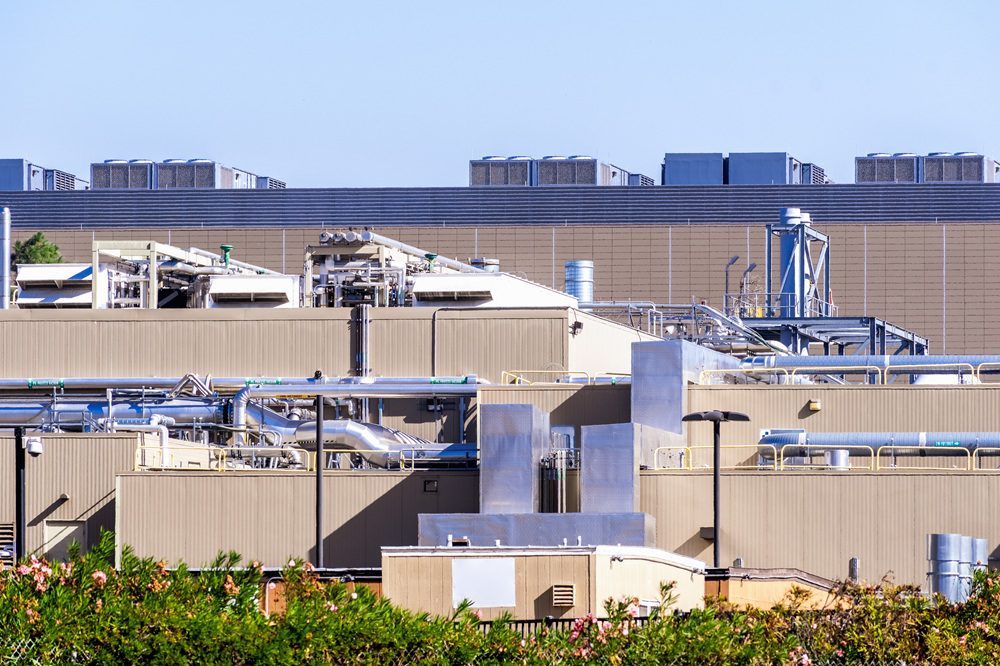
The news that NSW aims to make itself a world-class data centre capital has major implications for architects, builders, facility managers, security companies, and financial stakeholders in the field.
State Treasurer David Mookhey says NSW is positioning itself as a world leader in attracting global investment in data centres, providing the ideal conditions for tech giants to help fund the State’s clean energy transition.
Following on from his announcements, the Minns State Government announced that 15 data centre projects will progress through its Investment Delivery Authority (IDA), set up last year to support and fast-track major investment projects in NSW, helping with approvals and infrastructure delivery for projects.
High-profile projects include renewable energy, energy security, and data centres and technology valued at $1 billion or more, which have been earmarked to move ahead as the State Government releases the NSW Data Centre Consultation Paper to steer the sustainable development of the sector in New South Wales.
“The IDA-endorsed projects are collectively worth $51.9 billion and demonstrate the private sector’s interest in investing and building in NSW,” said the announcement, noting that there are already 90 data centres operating in NSW, with the value of data centre investments in the state growing 65% per year on average over the past three years. Data centres now account for 12% of all non-residential building investments.
Treasurer Mookhey’s comments in the Sydney Morning Herald – the latest of mass media and professional journals touting Australia’s and NSW’s data centre wares – say global interest in locating data centres and other digital technology in NSW can help fuel investment in the State’s transition to renewable energy, reducing the amount taxpayers will be forced to spend by asking tech companies to contribute financially.
Mookhey calls it the “virtuous cycle”. He said, “I am thinking about how we can solve two problems at once. If NSW gets this right, what it means is NSW gets access to some of the world’s best technology for our economy, but we are also getting industry to pay for some of the capital investment that otherwise consumers would have to pay”
Jobs benefits too, from our stable political environment and educated workforce.
Well, yes, this is good news. Mostly. With just a few caveats.
It is good that the State Government recognises the big issues here with power and water. Data centres consume huge amounts of both to operate and provide cooling. A single large data centre can consume as much electricity as 50,000 to 100,000 households, according to figures from the globally respected Massachusetts Institute of Technology, MIT Energy Initiative.
And their consumption is rising rapidly, owing to exponential growth of artificial intelligence (AI) and cloud computing, acting as engines of the digital economy, running 24/7 to process and store data.
Behind these capabilities are more than 10,000 data centres globally, each one a huge warehouse containing thousands of computer servers and other infrastructure for storing, managing, and processing data. There are now over 5,000 data centres in the United States, and new ones are being built every day – both in the U.S. and worldwide.
Estimates for Australia vary between 250-314, with over 270 commonly cited early 2026, as growth accelerated. Sydney holds the largest share, followed by Melbourne, Canberra, and Brisbane. And the number and capacity here are set to grow rapidly.
This is where it gets even more interesting. Energy, data centres, and security
In national and State terms, data centres do consume huge amounts of electricity. U.S. data centres, for example (already a world leader in the technology, along with China) consumed more than 4% of the country’s total electricity in 2023, and by 2030 that fraction could rise to 9%, according to the Electric Power Research Institute.
Currently, such facilities Down Under are estimated to consume roughly 2% to 5% of Australia’s national electricity, a figure projected to rise to 6% to 8% by 2030, due to AI growth.
The sudden need for so many data centres presents a massive challenge to the technology and energy industries, government policy makers, and design, construction, and management professionals.
Research scientists and faculty members at the MIT Energy Initiative (MITEI) are exploring multiple facets of this problem – from sourcing power to grid improvement to analytical tools that increase efficiency, and more. Data centres have quickly become the energy issue of our day.
Whether or not individuals believe data centre growth is inevitable – and I am one who does believe they are, based on our Boon Edam Group entrance security experience worldwide – there are important major questions remaining on location and security both of data centres – and of the increasingly dispersed green energy sources servicing them. Recent headlines from Iran underline this.
It is up to our strategic planners to decide whether it is wise to group major data centres concentrated around major population centres, or better to disperse their capacity over a multitude of data centre types.
Because we know critical infrastructure is essential for daily life in our society. Their importance often only becomes apparent when there are disruptions.
Therefore, a comprehensive approach to protecting these organisations and facilities is crucial to preventing interruptions in supply and significant disruptions to public safety.
The 2023 Critical Infrastructure Resilience Strategy, according to the Federal Home Affairs Department, defines critical infrastructure as:
Those physical facilities, supply chains, information technologies, and communication networks, which if destroyed, degraded, or rendered unavailable for an extended period, would significantly impact the social or economic wellbeing of the nation, or affect Australia’s ability to conduct national defence and ensure national security.
The Security of Critical Infrastructure Act 2018 defines each class of critical infrastructure asset. A single critical infrastructure asset includes multiple parts which function together as a system or network. This includes premises, computers, and data. If multiple components operate as a single system or network that meets the definition of a critical infrastructure asset, they are considered a single asset.
So the bottom line is this
Architects, builders, facility managers, security companies, and financial stakeholders are required to plan to ensure critical infrastructure is protected against everyday disruptions and extreme events.
This is not a choice – compliance is already required and statutory provisions are expanding for both significant data centres and electrical infrastructure.
Whether their future shape is mega facilities or smaller facilities, the need extends from in-house data facilities, to cloud service providers and throughout key facilities in between.
It also applies to key energy facilities, which will become increasingly dispersed as green energy sweeps through the economy.
And surely this push to extend and protect green energy facilities (and all current facilities) has been given additional impetus by the impact of current events, which led to the Prime Minister this month (April) giving a national televised address about energy challenges and headwinds Australia faces.
Examples of everyday security risks Australia must cope with as our data and energy resources change include technical failures, human error, wrongful access to secure areas, in-house sabotage. Even the threat of terrorist attacks is growing, particularly on public systems and supply infrastructure, including data, energy and transport, as it moves from fossil fuel to green options with which we are richly blessed.
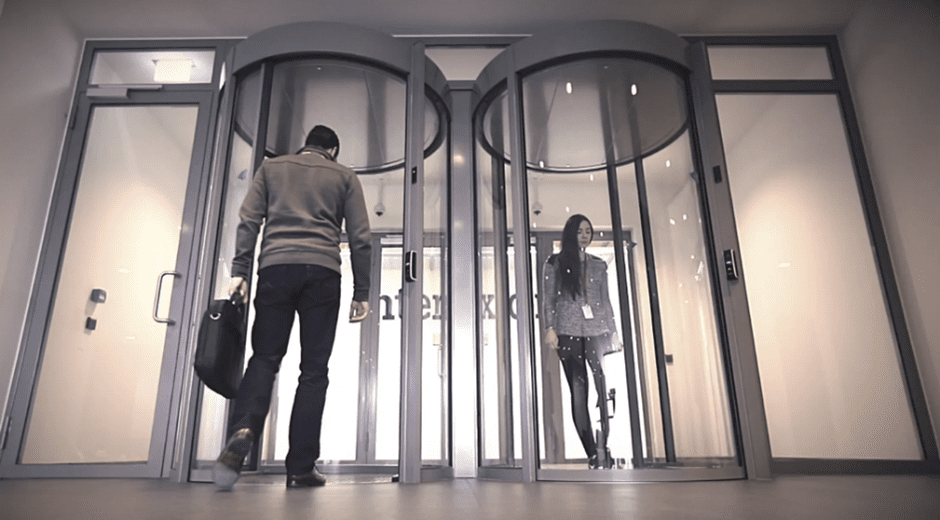
Layered physical security of data centre hubs complements cybersecurity – each type of centre security is not complete without the other
The threat is on two levels.
Cyberspace certainly represents a growing danger, where organisations are at risk from targeted attacks such as cyber sabotage or the introduction of malware.
Physical security is the other side of the same coin: physical access to facilities, and to operations-critical areas within them, must be restricted to authorised people. Intruders must be detected and deterred.
This is where Boon Edam’s worldwide experience complements our local experience in providing layered entrance security, which is the gold standard in the field.
Our experience extends from the largest to the most critical applications of entrance security, including for some of the world’s largest data service providers – and some of Australia’s leading commercial organisations, including those deeply involved in finance, telecommunications, IP, public and personal records, and energy provision.
This direct experience as a global layered physical security provider to some of the biggest data centres on Earth tells us that the surge in demand will bring in the years immediately ahead a renewed focus of physical security to safeguard our energy resources and critical data concentrated within a huge range of facilities.
Some of these data centres are already 20 times larger than facilities of just a few years ago.
So we are already seeing the picture of needs that is forming before us, and the signposts to our responsibilities.
Our Duties of Care are expanding as we watch the picture unfold.
Download Boon Edam’s white paper, “Best practices for data centre security and efficiency” for more insights into data centre security.
About the Author
*Mike Fisher is Managing Director of Boon Edam Australia, which is part of the privately owned international Royal Boon Edam group, which provides architectural revolving door and layered security solutions to some of the world’s largest companies, Fortune 500 companies, and companies in Australia, New Zealand, and Papua New Guinea including financial, data and telecommunications, Federal and State Government, hospitality, health and age care, logistics, retail, and distribution facilities. Boon Edam Australia operates under Master security licence number: 000104487.