


By Mike Fisher*
Findings that data centre insiders can pose greater security risks than external cyberattacks come as no surprise to those of us working with some of the world’s largest data centre and AI facilities through our global organisations.
The realisation has been building for some time, globally and locally.
One of the best-researched and most authoritative sources I have seen on this topic is AFCOM’s 2026 annual report, which includes a survey showing that 61% of data centre professionals now cite human and physical threats as a top concern.
According to AFCOM, human and physical threats eclipsed traditional ransomware concerns for the first time in nearly a decade. AFCOM is a long-standing international professional association for data centre and IT infrastructure management professionals, with branches in Australia.
Its concerns reflect the increasing use of zero trust mitigation strategies for physical security by hyperscale cloud providers, critical infrastructure developers, the financial and telecommunications sectors, as well as digital-intensive enterprises both private and Government. These organisations increasingly view physical security vulnerabilities and personnel-related risks within data centres as potential avenues for sabotage, espionage, or hardware damage.
“The uncomfortable truth is that we (data centre and IT professionals) now have new targets on our backs. The same attackers, insiders, criminal networks, activists, and hostile state-aligned actors that once focused primarily on data theft or extortion, are increasingly looking at access paths that include people, facilities, vendors, logistics, and the physical environment itself,” says Bill Kleyman, a prominent industry analyst and executive in the data centre and IT infrastructure sector whose article “The New Front Line: Securing Data Centers in the AI Era,” was published by AFCOM.
Kleyman discusses how the explosive growth of artificial intelligence has made data centres high-profile physical security targets. These facilities house incredibly valuable AI hardware, such as multi-million-dollar server racks, and have become vital infrastructure where the traditional boundaries between cybersecurity and physical security are increasingly blurred.
Drawing on the experience of the global Boon Edam entrance security organisation, we view malicious or careless data centre insiders as particular risks because their actions can endanger personnel, facilities, and entire networks on which our society depends.
We believe that enhanced physical security against such threats protects the vast majority of data centre employees who are dedicated professionals performing critical infrastructure tasks. This includes operations staff, facilities management teams, customer service, suppliers, and security workers. We have a clear Duty of Care to protect our people (more about this later).
Why insiders (both malicious and negligent) are so dangerous
- Because they have pre-approved access: Insiders do not need to break in or crack passwords because they use valid credentials to reach sensitive systems.
- Because they are hard to detect: Their actions can be disguised to look like normal daily work, which means malicious or careless behaviour can go unnoticed for extended periods.
- The increasing financial cost of their actions: According to the IBM Cost of a Data Breach Report, data breaches caused by malicious insiders cost an average of USD 4.99 million (more than AUD 7 million) per incident.
- Not all threats are malicious. Simple human errors – such as poor security habits, shared passwords, or misconfigured cloud storage – cause a large share of internal breaches.
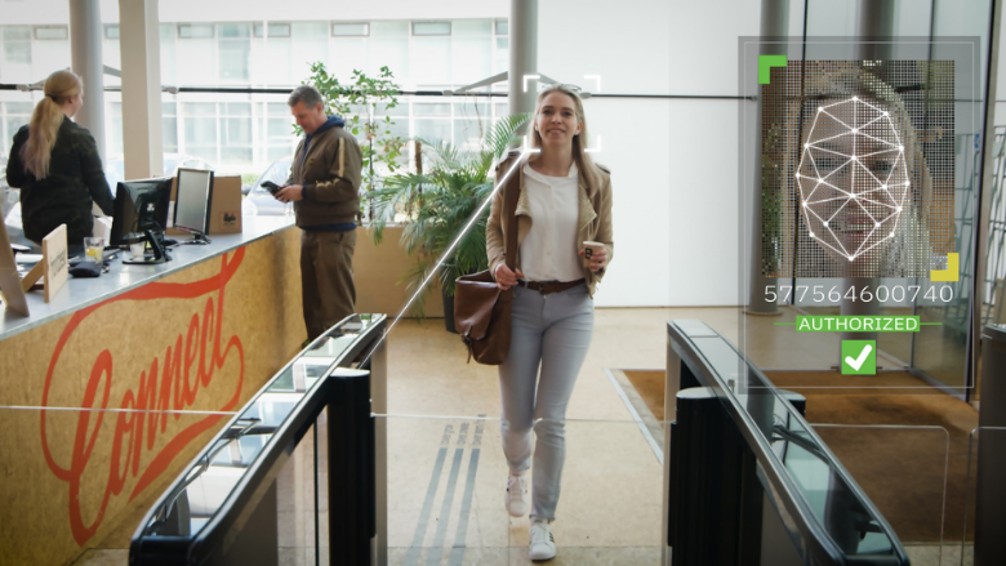
The security community – of which global entrance security company Boon Edam is part – was quick to extend the use of biometrics far beyond simple fingerprinting and into the realm of what might have been considered science fiction a generation ago. This evolution is closely aligned with Zero Trust Architecture principles, where identity is not simply verified once and then assumed to remain valid, but is continuously validated as users move through physical and digital environments.
- Growing dependence on physical infrastructure and facility control systems. Data centres rely on critical infrastructure, including water-cooling systems for server racks, backup generators, and power grids.
- The range of critical infrastructure requiring protection is expanding. Water and energy conservation technologies, as they become industry standards, will also require their own layers of security. In the AFCOM survey, 36% of respondents already have liquid cooling deployed and another 28% plan adoption within the next 12–24 months. Rack density is a key factor driving the adoption of liquid cooling, with hyperscale facilities rapidly increasing rack density to support AI and high-performance computing (HPC) workloads.
- The growing focus on industry sustainability and the expansion of renewable energy infrastructure, which will become mission-critical and require layered physical protection. 38% of AFCOM respondents report using renewable energy today, and 37% plan to do so within the next three years. Also, 30% have initiatives in place to manage water and energy usage, and another 41% have such initiatives planned. The industry, both in Australia and globally, is raising its sustainability ambitions in anticipation of tighter regulatory requirements and growing community concern about environmental impacts
- The sheer volume of data being stored within hyperscale facilities is a compelling reason for layered facility protection. For example, estimates suggest that 1 GW of data centre capacity can support the cloud profiles, media files, and digital records of tens to hundreds of millions of users. This figure can extend to billions of individual database records and transaction logs, although the volume varies depending on the workload, such as leading-edge research.
- And it is happening now in Australia. Melbourne has approximately 1.1 GW to 1.92 GW+ in total planned and developing phases, according to JLL (Jones Lang LaSalle), Sydney’s new planned additions are estimated at roughly 384 MW, on top of a live operating capacity estimated at 667 MW across 90+ facilities, according to a Fitch Ratings data centre analysis. Other states – and Canberra in the ACT – are also strongly focused on the physical security of the facilities they are building to serve private, public, and strategic interests (as noted in the Security of Critical Infrastructure Act 2018, or SOCI, which is the continuously updated legislative framework designed to protect vital national assets and essential services from cyberattacks, physical disruptions, and all-hazard threats).
So what does this mean for security planning in 2027?
That is a key question for all of us involved in data centre and AI facilities. This includes security planners and installers, data managers, network and sustainability engineers, system architects, centre designers, architects, builders and construction specialists, building owners and facility managers, and suppliers to these diverse groups.
Undoubtedly the first response to the big picture questions of cyber and physical security should be planned and evolved together, because they are different sides of the same coin.
AFCOM highlighted this dual security challenge when respondents to its 2026 survey were asked to identify their five greatest security and infrastructure threats. Its report observes:
“Respondents cited human threats (internal or external) more than any other factor, cited by 61%, up from 58% last year and just 40% in 2024. Ransomware follows closely behind, cited by 58%, but it’s the first time in nearly a decade it wasn’t the most cited. The other top risks are AI-driven synthetic identity attacks (cited by 46%), advanced persistent threats (44%), and DDoS attacks (42%). As data centres are recognised as critical infrastructure supporting AI platforms, financial systems, government workloads, and national security, that visibility increases exposure to insider risk, coordinated physical attacks, and social engineering campaigns.”
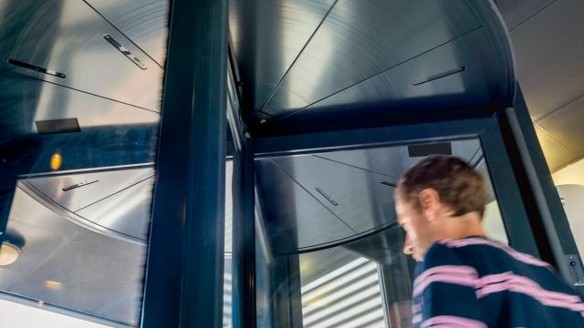
StereoVision is a highly sophisticated overhead piggybacking detection system from Boon Edam that uses a combination of optical and near-infrared sensors to recognise shapes, size, and volume in three dimensions, without impact from lighting or reflections. Advanced entrance technology (including mantraps, revolving doors and speed gates) may also be technology-agnostic, so it can incorporate the most advanced methods of behaviour tracking and recording while being cost-efficiently used to reduce dependence on expensive manned security, which can be concentrated where it is most effective. (Read Boon Edam’s white paper on facial recognition in access control.)
The evolving legislative framework
The security, sovereignty, and resilience of hyperscale data centres in Australia up to 2030 and beyond are governed by a rapidly evolving framework of federal policy, national security strategies, and newly mandated AI infrastructure rules.
The primary regulatory and policy documents shaping this landscape include:
- 2023–2030 Australian Cyber Security Strategy. The Australian Cyber Security Strategy serves as the primary overarching umbrella document for federal data security up to 2030. It absorbed the previous National Data Security Action Plan, integrating data infrastructure security directly into national cyber resilience goals. It mandates stricter security baselines for critical infrastructure providers, including hyperscale and mega data centre operators.
- The National Framework for AI Infrastructure and Large Data Centres (September 2026 Consultation). This is managed by the Department of the Prime Minister and Cabinet (PM&C). The consultation paper “Getting it right: Building AI infrastructure that works for Australia” proposes a mandatory, legislative framework for data centres. It introduces a tiered capacity framework focussing particularly on large facilities.
- Then there is the National AI Plan, summarised by the Department of Industry, Science and Resources Expectations which form the direct blueprint for incoming mandatory legislation. Meeting these national expectations will be the foundation of data and AI facilities’ social licence to operate in Australia. Again, this regulatory governance is particularly relevant to mega data centres.
- Finally, the evolving SOCI Act strictly governs data centres through to 2030 and beyond. Hyperscale facilities are categorised under the Data Storage or Processing Sector as critical infrastructure assets. This governance subjects operators to mandatory cyber incident reporting, background checks for personnel, and direct government intervention powers during severe cyber emergencies.
Our individual Duty of Care – and how we meet it
On an individual enterprise level, all participants in the data industry have an overarching legal duty of care which complements the regulatory framework above.
This legal obligation requires an individual, business, or organisation to take reasonable steps to avoid causing foreseeable harm to others or their property.
So much has been said, written, and legislatively enshrined in Australian law that the data centre and AI industry clearly, demonstrably has foreknowledge of what is required. Therefore, there is a concomitant responsibility to act to ensure strong standards of cyber and physical security.
Meeting these broad requirements at the enterprise level requires experienced guidance from partners who understand the issues involved and can work together towards a shared objective.
Not all suppliers or partners can. While I cannot speak with authority on cybersecurity, I can draw on the physical security guidance and experience gained through the Boon Edam Group’s operations in 27 countries, including its Australian branch. This privately owned entrance and technology specialist group recently celebrated the 153rd anniversary of its founding.
Our enduring experience in providing layered physical security for some of the world’s biggest digital technology companies is reflected in our ability to apply this strategic knowledge to corporate and public enterprises wishing to attain the same standards of functional and reputational protection.
Dealing with a single physical protection company that provides multiple integrated data centre solutions from under one roof also delivers several operational, financial, and security advantages, including:
- Seamless system integration
- Faster incident response
- Simplified compliance and audits
- Removal of “grey” areas of responsibility among sub-contractors, ensuring layered solutions are properly matched and maintained without disputes resulting from multiple overlapping responsibilities.
While every enterprise has its own challenges, requirements, and culture, an advantage of physical security partnerships is access to a range of solutions and ongoing support. One size or type of physical protection does not fit all.
Whichever physical security partner is selected, the decision should be guided by both current capabilities and a demonstrated commitment to long-term support.
After all, data and AI centres are strategic investments with horizons extending over years and decades. Ideal partners share the same commitment.
About the Author
*Mike Fisher is Managing Director of Boon Edam Australia, which is part of the privately owned international Royal Boon Edam group, which provides architectural revolving door and layered security solutions to some of the world’s largest companies, Fortune 500 companies, and companies in Australia, New Zealand, and Papua New Guinea including financial, data and telecommunications, Federal and State Government, hospitality, health and age care, logistics, retail, and distribution facilities. Boon Edam Australia operates under Master security licence number: 000104487.
About Royal Boon Edam
With work environments becoming increasingly global and dynamic, smart, safe entry has become the centre of activity in and around many buildings. Royal Boon Edam is a global market leader in reliable entry solutions. Headquartered in the Netherlands, with 150 years of experience in engineering quality, we have gained extensive expertise in managing the transit of people through office buildings, airports, healthcare facilities, hotels, and many other types of buildings. We are focussed on providing an optimal, sustainable experience for our clients and their clients. By working together with you, our client, we help determine the exact requirements for the entry point in and around your building.
You can find more news about Boon Edam on www.boonedam.com.au/news