
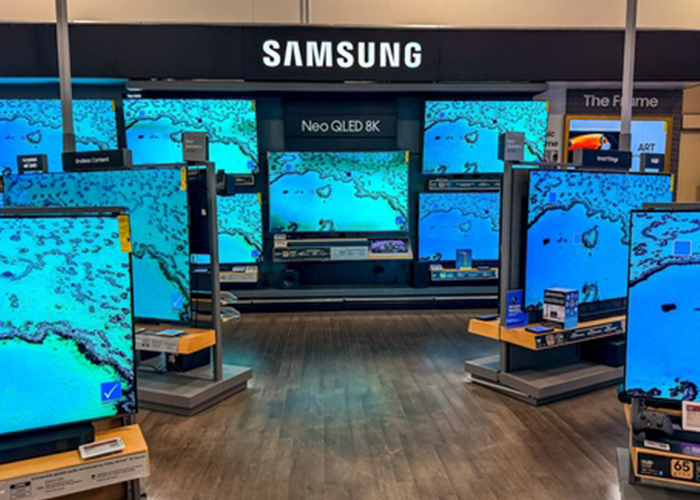
A ransomware group has allegedly leaked more than 150,000 Samsung smart TV viewing records alongside political advertising information and artificial intelligence training data, raising concerns about the security and privacy of information collected through internet-connected televisions.
The group, known as N0n, published approximately 220MB of data on its dark web leak site after claiming to have compromised information associated with Samsung Electronics.
Cybersecurity researchers at Cybernews examined the exposed files and identified datasets containing television viewing activity, advertising intelligence, AI model training information and internal corporate documents.
Samsung had not publicly confirmed the alleged breach or provided a response to Cybernews at the time of its report on 20 November 2026.
According to the researchers, one of the largest datasets contained approximately 150,000 smart TV viewing events recorded during 2024.
The information included timestamps, viewing durations, device details, city locations, US ZIP codes and television service provider information.
Although the exposed records did not identify the specific programmes watched by individual users, they provided information about viewing patterns and the operation of Samsung’s television data collection systems.
The findings highlight the extent to which connected televisions can collect and process information about household entertainment habits, potentially creating detailed behavioural datasets used for advertising and audience measurement.
A separate dataset contained approximately 42,600 records relating to political advertising broadcast between September and October 2026.
These records reportedly included political affiliations, campaign issues, advertising sponsors, estimated advertising expenditure and broadcast timestamps.
Researchers also identified a political advertisement video among the exposed files.
The political advertising information raises additional questions about the commercial intelligence held by connected television platforms and the potential sensitivity of datasets used to measure advertising campaigns.
Although the records do not establish that individual viewers’ political preferences were exposed, they could provide insight into advertising expenditure, campaign priorities and the targeting strategies of political organisations.
The leaked material also reportedly contained approximately 99,100 records associated with AI advertising model training conducted in 2021.
These records primarily consisted of embedding vectors, mathematical representations of data used in machine learning systems.
Such information can support advertising classification, audience analysis and predictive modelling, although the extent to which the exposed vectors could reveal commercially sensitive information has not been independently established.
Two internal documents were also identified.
One, dated September 2026, reportedly outlined an agreement governing the appropriate use of collected data and contained the name and email address of a Samsung employee.
Another document, described as an access questionnaire for Samsung’s Content Data Warehouse, contained employee information and details relating to internal infrastructure.
The exposure of internal documents could create additional security concerns if the information assists threat actors in identifying personnel, understanding corporate systems or developing targeted social engineering attacks.
The ransomware group’s claims were independently recorded by cybersecurity intelligence provider Brandefense, which identified Samsung Electronics as appearing on N0n’s leak site on 14 November 2026.
Brandefense reported that the attackers claimed to possess automatic content recognition viewing records, household-level geographical information, device advertising attributes, AI training material and internal data governance documents.
However, the intelligence provider cautioned that recording a ransomware group’s claim does not establish that a breach has been independently verified.
The incident has also renewed attention on automatic content recognition (ACR), a technology used by smart televisions to identify content being displayed and support audience measurement, recommendations and targeted advertising.
ACR systems can generate valuable commercial information by analysing television usage and identifying patterns in household viewing behaviour.
While these capabilities support advertising services and content recommendations, they also introduce privacy and security considerations concerning data collection, user consent, retention periods and the protection of information shared with commercial partners.
Samsung’s smart television data practices have previously attracted regulatory and legal scrutiny in the United States.
The company has faced allegations concerning the collection of viewing information through ACR technology, including questions about whether consumers have provided appropriate consent.
In October 2026, separate security research also raised concerns about the extent of data collection capabilities within Samsung’s Tizen smart television operating system.
Those allegations included claims concerning audio processing, viewing behaviour and advertising-related device identification, although the findings did not establish that all the identified capabilities were being used for covert surveillance.
Samsung previously stated that its ACR service is not enabled by default, requires users to opt in and can be disabled.
The company also maintained that viewing information is not collected or transmitted through ACR when the service is turned off.
The latest alleged data leak is a separate incident and does not establish that Samsung’s stated consent controls were bypassed or that the televisions themselves were remotely compromised.
Nevertheless, the incident illustrates the potential consequences of aggregating large volumes of behavioural and advertising information within connected device ecosystems.
For consumers, the risks extend beyond conventional personal information such as names, passwords and financial account details.
Information about device usage, household locations, advertising interactions and viewing patterns can also become sensitive when combined with other datasets.
For advertisers and political organisations, the exposure of campaign intelligence could reveal commercially valuable information about spending priorities, advertising strategies and audience engagement.
The incident also demonstrates how data collected for legitimate commercial purposes can become a target for cybercriminal groups seeking to exploit the value of corporate information.
N0n is a relatively new ransomware operation that emerged in September 2026.
Cybersecurity researchers have reported that the group uses artificial intelligence tools to support elements of its malicious activity, including scripting, reconnaissance and other technical tasks.
The group has also claimed attacks against several major international companies, although such claims require independent verification.
For Australian organisations, the alleged Samsung incident highlights broader risks associated with connected devices and the growing volume of information collected through consumer electronics.
Smart televisions, connected appliances and other internet-enabled devices increasingly operate as data collection platforms, creating additional responsibilities for manufacturers and service providers to protect information throughout its lifecycle.
The exposure of political advertising records also raises questions about the governance of data used in digital campaigning and the transparency of commercial arrangements involving audience measurement.
At this stage, there is no confirmed evidence that Australian Samsung customers were affected by the reported leak.
The available research primarily identifies records associated with US television audiences, and the total number of unique devices or households represented in the exposed data remains unclear.
Further clarification from Samsung will be important in establishing the source of the information, whether company systems or third-party services were compromised, and the extent of any customer or commercial exposure.
The incident reinforces the growing cybersecurity implications of connected consumer technologies, where information collected for advertising and analytics can become a valuable target for criminal groups.
As manufacturers continue to integrate AI-driven personalisation and advertising services into household devices, the security of behavioural data and the transparency of its collection are likely to attract increasing regulatory and public scrutiny.